
Fields in Bay County Property Tax Records
Several offices share these records. Local rolls and bills stay with the assessor and treasurer. County Equalization balances values and the County Treasurer takes delinquencies, so label every figure with its tax year, assessment year, local unit, and source date, since a current bill, a delinquent ledger, and an assessment roll mark different stages.
| Field | What It Shows | Where |
|---|---|---|
| True Cash Value | Estimated usual selling price | Assessment roll/local assessor |
| State Equalized Value | Generally 50% of TCV after equalization | Assessment roll |
| Taxable Value | Value to which millage is applied | Assessment roll and bill |
| PRE status | Principal Residence Exemption treatment | Local assessor |
| Bill and payment status | Tax-year charges, payment, delinquency | Local or county treasurer |
A sale price proves a transfer, not a tax value. TCV, SEV, and Taxable Value relate to one another, yet none can stand in for another in a property records search.
Who Bills Bay County Property Tax?
Your city or township treasurer mails the July and December bills. Delinquency follows a different path. Unpaid amounts move to the Bay County Treasurer, which runs forfeiture, foreclosure, redemption, auctions, and excess-proceeds matters. Ask the local unit about a current bill. Ask the county about a transferred delinquency. For lookups, Bay County Equalization links BS&A Online for assessment and tax information, though the local assessor remains the source for the property record card and any corrections.
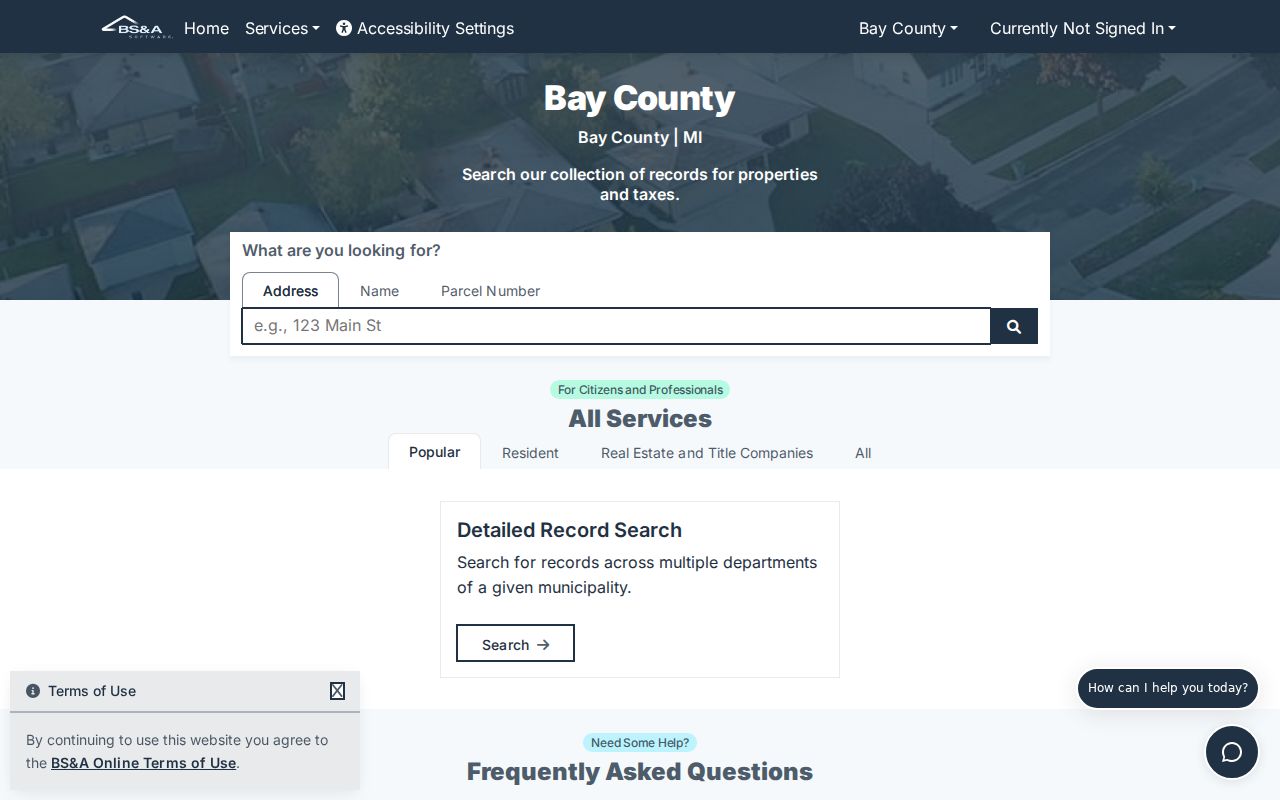
Treat displayed values as dated roll entries. When history or update timing matters, request the underlying card from the assessor.
Look Up a Bay County Tax Bill
Use the full PIN whenever you can. It ties the assessment entry to the right local unit and keeps similar addresses from getting mixed up in a parcel search.
- Find the parcel and local unit through BS&A or the Bay County property search.
- Read the current tax year, bill dates, charges, payment status, and taxing-unit breakdown.
- Compare TCV, SEV, Taxable Value, and PRE status on the assessment record.
- If delinquent, contact the County Treasurer for the effective balance, fees, forfeiture, foreclosure, redemption, or auction stage.
- SEV
- The equalized assessment, generally one-half of TCV.
- Millage
- The rates applied to taxable value by taxing authorities.
- PRE
- Michigan's Principal Residence Exemption for a qualifying principal residence.
- Tax lien
- The county interest arising in the delinquent-tax process.
PRE Status Can Change the Bill
Michigan's Principal Residence Exemption changes how school operating tax treats a qualifying principal residence. The state publishes Form 2368 with filing guidance. File it with the city or township assessor. The deed office has no role. New owners face a second task: file the Property Transfer Affidavit with the local assessor inside the state's 45-day window. A recently recorded deed can reach the record before the next roll refresh, so line up the recording date, transfer paperwork, and assessment year.
Bay County's Three-Year Delinquency Sequence
The Treasurer's process page separates ordinary delinquency from forfeiture and foreclosure. Year one starts the clock. Unpaid local taxes transfer to the county on March 1. In year two, March 1 forfeiture creates a county lien, and the county begins petition work, title research, visits, and notice. Year three closes redemption on March 31. Ownership then transfers to the county under the described process.
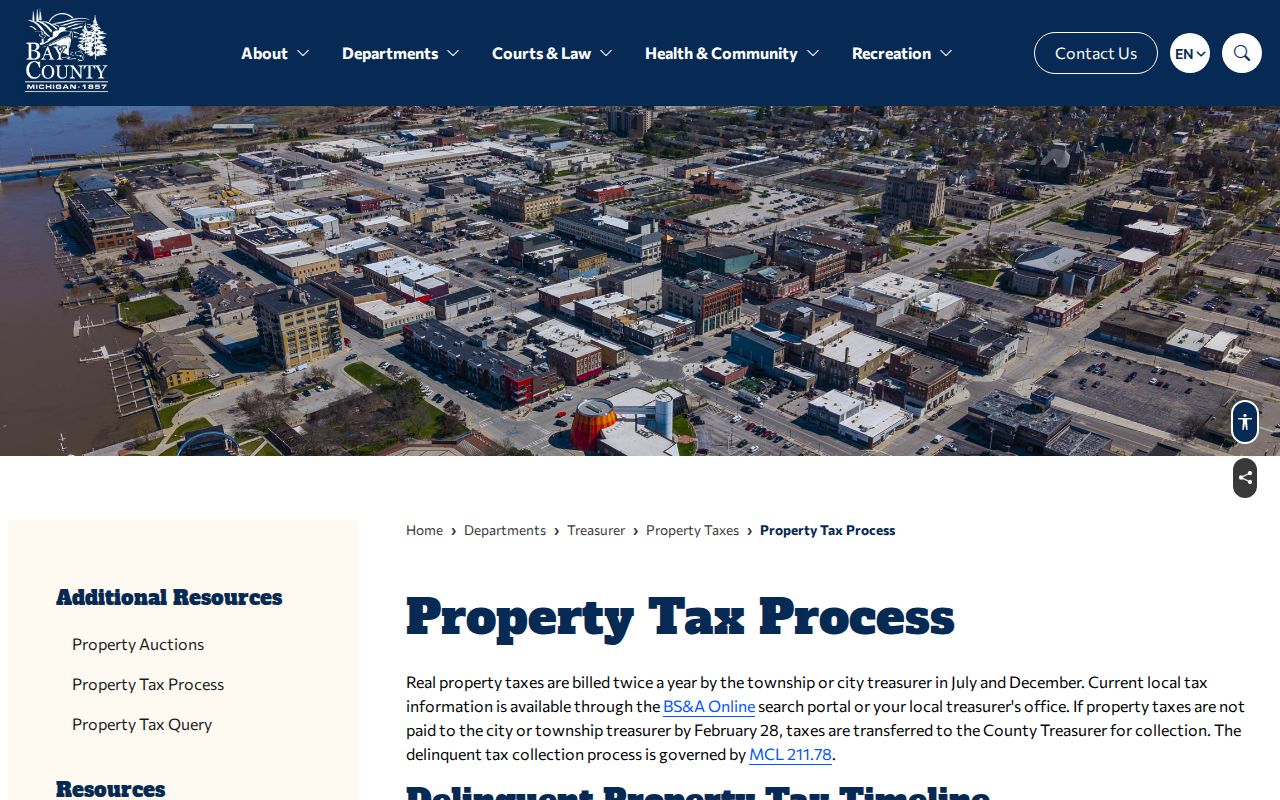
A portal label proves nothing about title. Before relying on any auction listing, confirm payment, redemption, court action, and a later recorded deed in the deed records.
Current Auctions Require a Fresh Check
The Bay County auction page announced a virtual auction set for August 3, 2026, with bidding opening 30 days earlier. Parcel lists and terms sit there too. So do excess-proceeds details and MCL 211.78t forms.
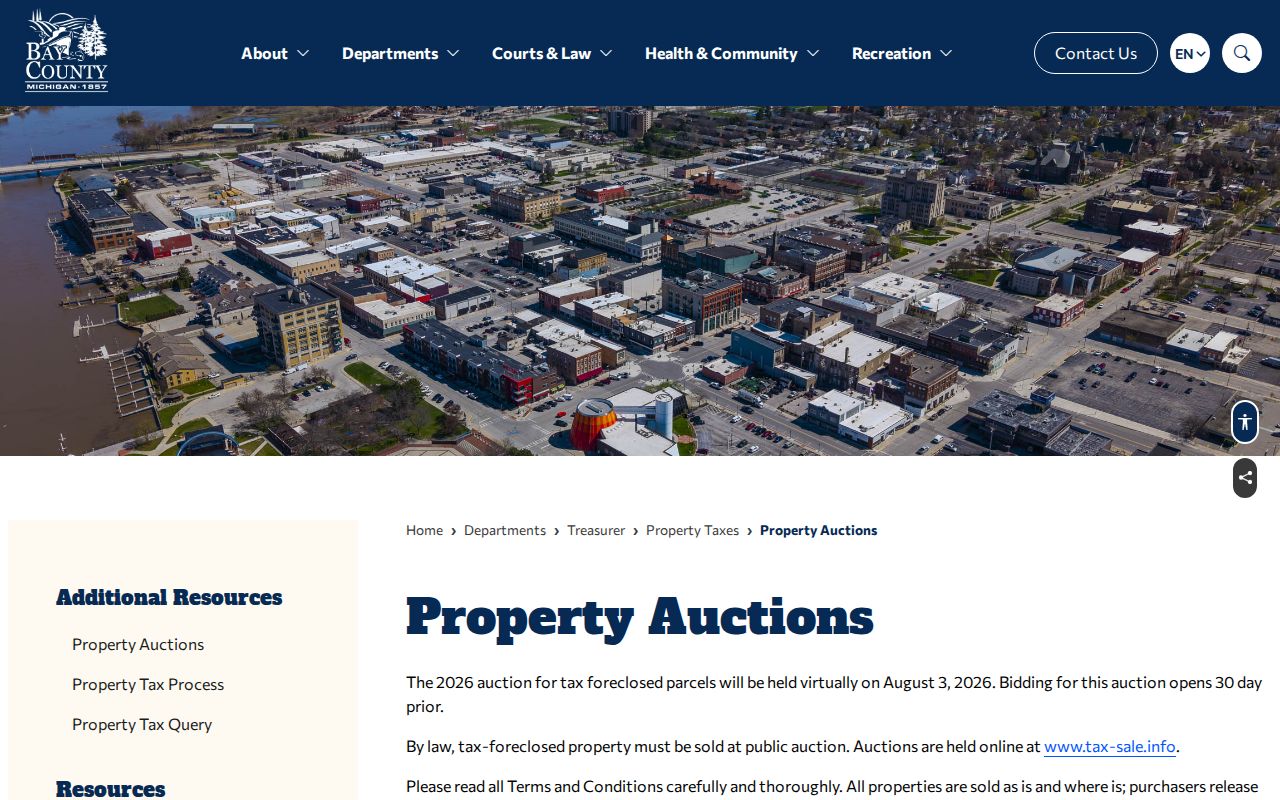
Auction status shifts fast. Pull the current list and terms yourself, then examine title, access, zoning, environmental conditions, and redemption status before bidding on any parcel.
Challenge a Bay County Assessment
Start with the annual notice. The local assessor answers first questions. The March Board of Review is the ordinary local route. Confirm the right property, classification, TCV, SEV, Taxable Value, transfer history, PRE status, and card details, then supply evidence in the form and by the deadline the local unit requires. The county appeal guidance lays out the sequence through the local Board and, when applicable, the Michigan Tax Tribunal. July 31 marks the Tribunal filing route for qualifying residential appeals after local review. Confirm current requirements each assessment year.
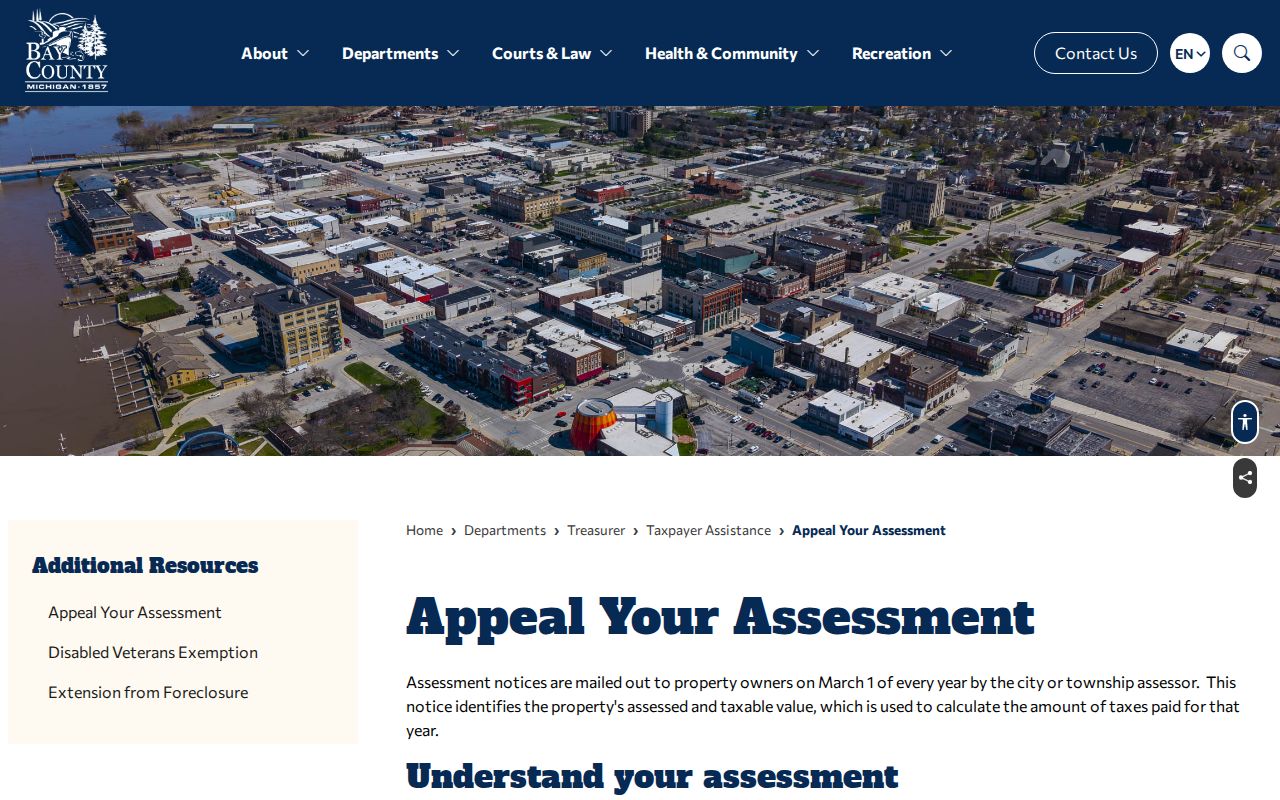
Keep the Board decision and proof of timely filing with the property record.
Appeal window. Bay County assessment disputes begin with the local March Board of Review. Confirm that municipality's meeting and filing dates immediately after receiving the notice.
Separate Assessment Changes from Market Sales
A purchase price is market evidence. It does not automatically become TCV or Taxable Value. To see why, compare the transfer date, the assessment year, uncapping rules, PRE status, and the physical facts on the property card. The assessor's stated valuation method matters too. In an appeal, offer comparable sales or factual corrections in the format your local unit wants. A portal estimate is not an appraisal. The Bay County property value guide explains what the three value categories mean, while property tax records track their role in assessment and billing.
Request Tax Records Beyond the Portal
Portals rarely show everything. Ask the local assessor for the current property record card, assessment history, taxable-value history, PRE status, and any parcel-description or split records. Current bills belong to the local treasurer. Delinquent questions go to the County Treasurer. Request a balance by year, forfeiture or foreclosure stage, redemption deadline, petition or notice, auction-list status, and excess-proceeds material there. Include the PIN, address, unit, years, and date. Michigan FOIA reaches existing non-court county records, though it cannot force an office to build an analysis for you.
Verify a Tax Status Across Records
A delinquent tax bill, a tax foreclosure, a mortgage foreclosure, and an auction listing are four different things. Each lives in a different office. Check the Treasurer for the tax process itself, the Circuit Court for any foreclosure file, and the Register of Deeds for a tax deed, lien, release, or similar recorded instrument.
Note the date on anything you save. Redemption, payment, a court order, or a sale can shift a property's tax status overnight. For purchase research, tax records are only a starting point. Access, zoning, recorded encumbrances, environmental leads, and the legal description all deserve their own review. Property tax records alone establish neither marketable title nor a property's physical condition.
Preserve the Tax Year and Source Date
Values and balances sometimes disagree between offices. When they do, build a simple comparison. Record the source, the displayed amount, and the applicable year. Note the retrieval date and your next verification step.
The gap is often legitimate. A local current-bill screen can differ from the County Treasurer's transferred delinquency ledger. The latest deed date may also precede the assessment-roll update. That update changes the owner and the taxable-value treatment.
Keep the whole paper trail together. That means the complete PIN, the local-unit name, the assessment notice, the bill, payment confirmation, any exemption filing, the Board decision, and any foreclosure notice. Dated evidence separates a genuine change from a portal that simply has not caught up. If an online record will not load, ask the responsible assessor or treasurer for the existing record.