
What Bay County Deed Records Document
The Bay County Register of Deeds handles recording for deeds and related land instruments. Its index proves an instrument was presented and recorded. The deed image itself supplies the parties, legal description, consideration language, signatures, and prior references needed to judge the transaction.
| Deed Type | What It Does | Common Use |
|---|---|---|
| Warranty deed | Conveys an interest with stated covenants | Property conveyance |
| Quitclaim deed | Conveys whatever interest the grantor holds | Family, correction, or interest transfer |
| Trustee or personal-representative deed | Conveys under trust or estate authority | Estate administration |
| Sheriff or tax deed | Records an outcome in a foreclosure process | Distressed-property research |
| Mortgage, assignment, release | Creates, transfers, or discharges security | Encumbrance chain |
Not every recorded document is a deed. Mortgages and liens can surface in the same recorded-document search, so weigh each result by its instrument type. Easements, restrictions, affidavits, court orders, plats, assignments, and releases all belong in a full reconstruction of the land record too.
Start with the Bay County Register
The Register of Deeds office sits at 515 Center Avenue, Suite 102, in Bay City. The phone number is 989-895-4228. Doors are open weekdays, 8:00 a.m. to 5:00 p.m. In-house research generally ends at 4:30. The office page also links Doxpop, a 1958–1984 card index, tax maps, subdivision plats, eRecording, and fraud alerts.
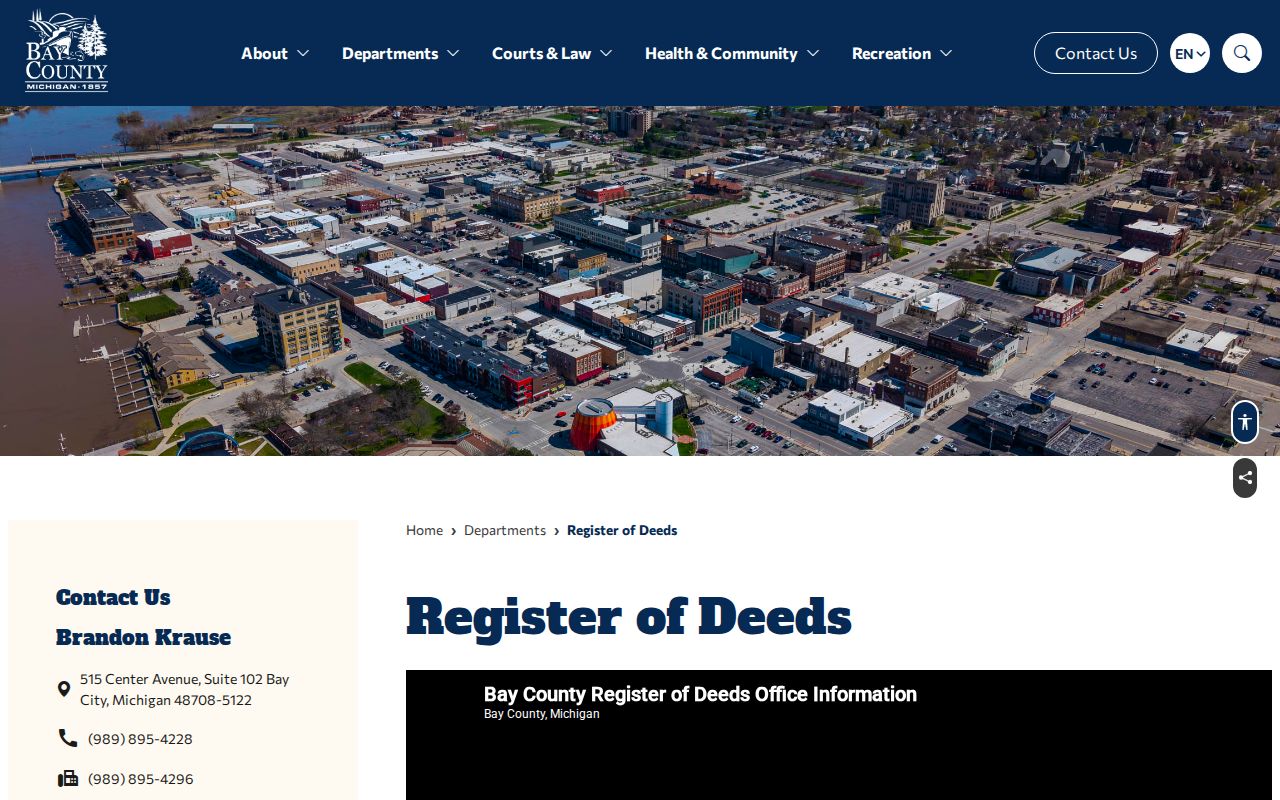
This is also the office for missing images, older index questions, recording help, and plain or certified deed copies.
Follow Bay County's Grantor-Grantee Index
The Register routes 24/7 online searching to Doxpop. Search each party in both roles. A grantor transfers an interest, and a grantee receives one. Try initials, punctuation, former surnames, trustee wording, and entity suffixes. Spellings drift across decades of deed records. Rely on the search controls the portal currently displays. Do not assume fields or coverage dates.
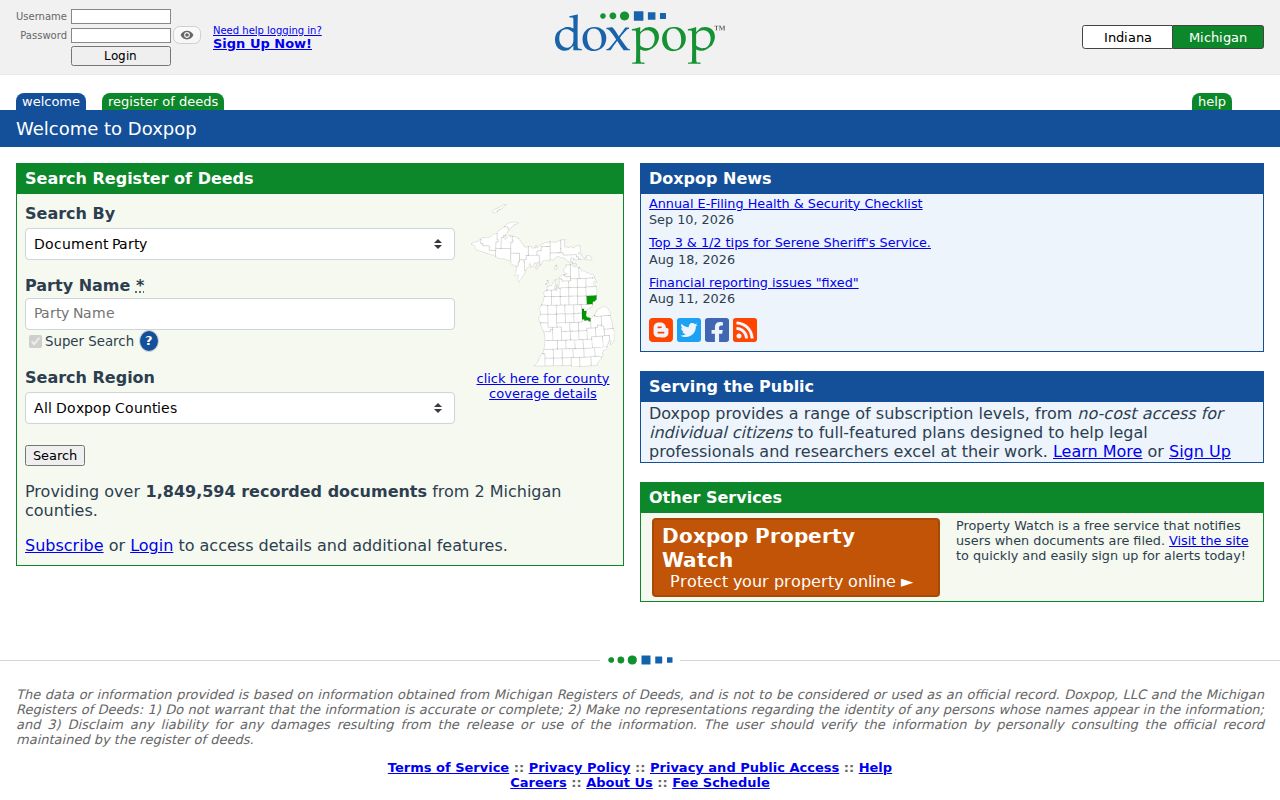
Read the instrument whenever available; an index row is not the deed.
- Find the newest deed tied to the correct PIN and legal description.
- Read its grantor, grantee, recording date, deed type, and prior reference.
- Search the grantor as an earlier grantee and repeat name variants.
- Compare the legal description at every step and switch to cards, books, or archives when online coverage ends.
- Grantor
- The party transferring an interest.
- Grantee
- The party receiving an interest.
- Chain of title
- The connected sequence of recorded conveyances.
- Liber/Page and Document Number
- Older book-and-page citation versus the Document Number used from January 1, 2018 forward.
Bridge Deed Books, Cards, and New Numbers
Bay County deed records survive in several formats. The Register links a 1958–1984 card index and describes post-1987 online records. Archives of Michigan holdings list deeds from 1842–1886 plus a deed index covering 1853–1907. Those years are collection ranges, not a title-search boundary.
| Era | Reference | Route |
|---|---|---|
| 2018 forward | Document Number | Doxpop and Register |
| Older county chain | Liber/Page | Index, office, deed books |
| 1958–1984 | Card reference | Register-linked card index |
| Archival series | Collection, volume, page | Archives of Michigan |
Bay County was organized in 1857 and reached its present boundaries in 1883. The 1905 consolidation of West Bay City can also leave older municipal and addition names scattered through a deed chain.
Separate Recording Fees from Transfer Charges
The county fee page posts a general $30 flat recording fee. Certain assignments or discharges add $3 per additional instrument. Warranty deeds and specified conveyances may need a separate $5 tax-certificate check payable to the Treasurer. State transfer tax runs $7.50 per $1,000 of consideration. County transfer tax adds $1.10 per $1,000.
Those figures cover recording, not certified-copy or online-image prices. Ask the Register for the current copy cost.
Watch for New Bay County Filings
The Register offers free Doxpop Watch alerts when someone attempts to transfer title. That is a notification service only. It is not title insurance, not a block on recording, and not a finding that any document is valid.
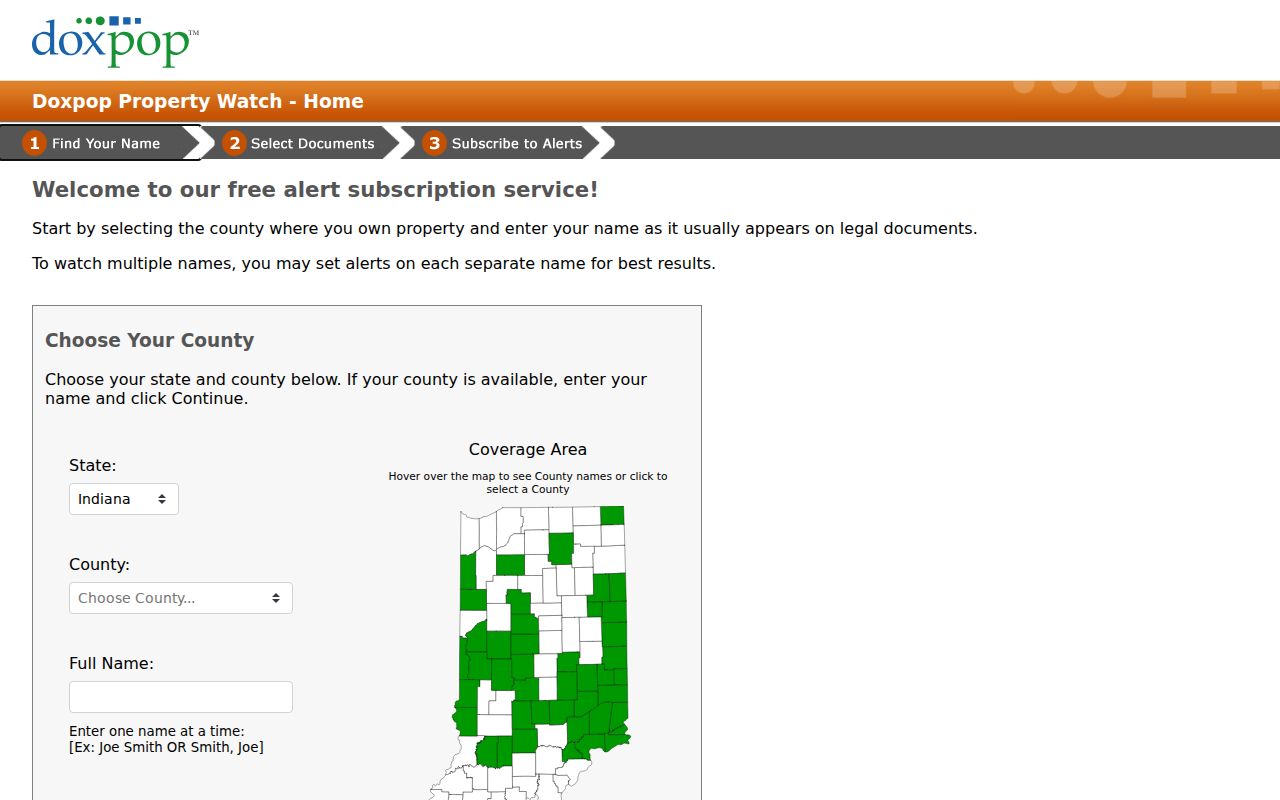
If a filing looks unfamiliar, save the document number and recording date. Inspect the instrument itself and contact the Register promptly.
Search Legal Text When Names Drift
A legal description can hold a subdivision, addition, lot, block, outlot, section, township, range, exception, or vacated-street phrase that a street search misses. That phrasing anchors any parcel search. Equalization's subdivision and condominium index identifies the official plat vocabulary worth carrying into deed research. When a search returns nothing, widen the date window. Try both party roles and preserve every spelling variant. Ask the Register which older index series applies, and remember that a modern address is convenient but the recorded legal description is the stronger continuity check.
Order a Bay County Deed Copy
Gather the document number or Liber/Page, recording date, parties, instrument type, and legal description before requesting a copy. Review an online image if one is offered. Otherwise visit, call, or mail the Register. A mailed request should include a self-addressed stamped envelope and payment instructions confirmed with the office. A plain copy suits reading. A certified copy carries the custodian's certification, though neither is a professional title opinion, and older references may need an in-house search before the document can be pulled.
Recorded, not guaranteed. Bay County deed records show filed instruments, not clear title; unrecorded interests or competing claims can require a qualified title examination.
Connect Plats to Bay County Deeds
Modern addresses can hide the addition, outlot, block, lot, or condominium name inside the legal description. Equalization's subdivision and condominium index supplies local-unit code PDFs and section-township-range clues. Preserve the plat title exactly. Then search Bay County deeds for that wording. Inspect any exception, vacated-street, river-boundary, or easement language you find. A plat establishes recorded subdivision geometry. A GIS line is only orientation. When the legal description changes between transfers, locate the replat, land division, correction deed, or court order that explains it.
Estate Transfers May Break a Simple Chain
A death-related transfer can pull in the last deed, Probate Court file, personal-representative authority, trustee deed, affidavit, court order, and the next assessment roll. Search the decedent, the estate, and the personal representative. Add trustee and successor names where they apply. MiCOURT is only a case lead. Request the actual order or letters from Bay County Probate Court. Michigan's Property Transfer Affidavit goes to the local assessor after a transfer. It can explain when the tax roll changes. It never replaces the recorded deed or the court's authority.
Document Every No-Result Deed Search
Log the system, exact spelling, party role, date range, category, and legal text used. Retry surname punctuation, initials, and entity suffixes. Try grantor versus grantee, old municipal names, additions, and parcel descriptions. Then switch to the 1958–1984 card index. Try in-person research, older deed books, or the Archives of Michigan guide.
This discipline keeps a portal limitation from becoming a false "no deed" conclusion. State the coverage gap. Identify which official channel still needs checking.